
Electrical Engineering Software for High-Complexity Projects
Specialized simulation, modeling and analysis tools that support every technical decision in substations, transmission lines and electrical power systems.

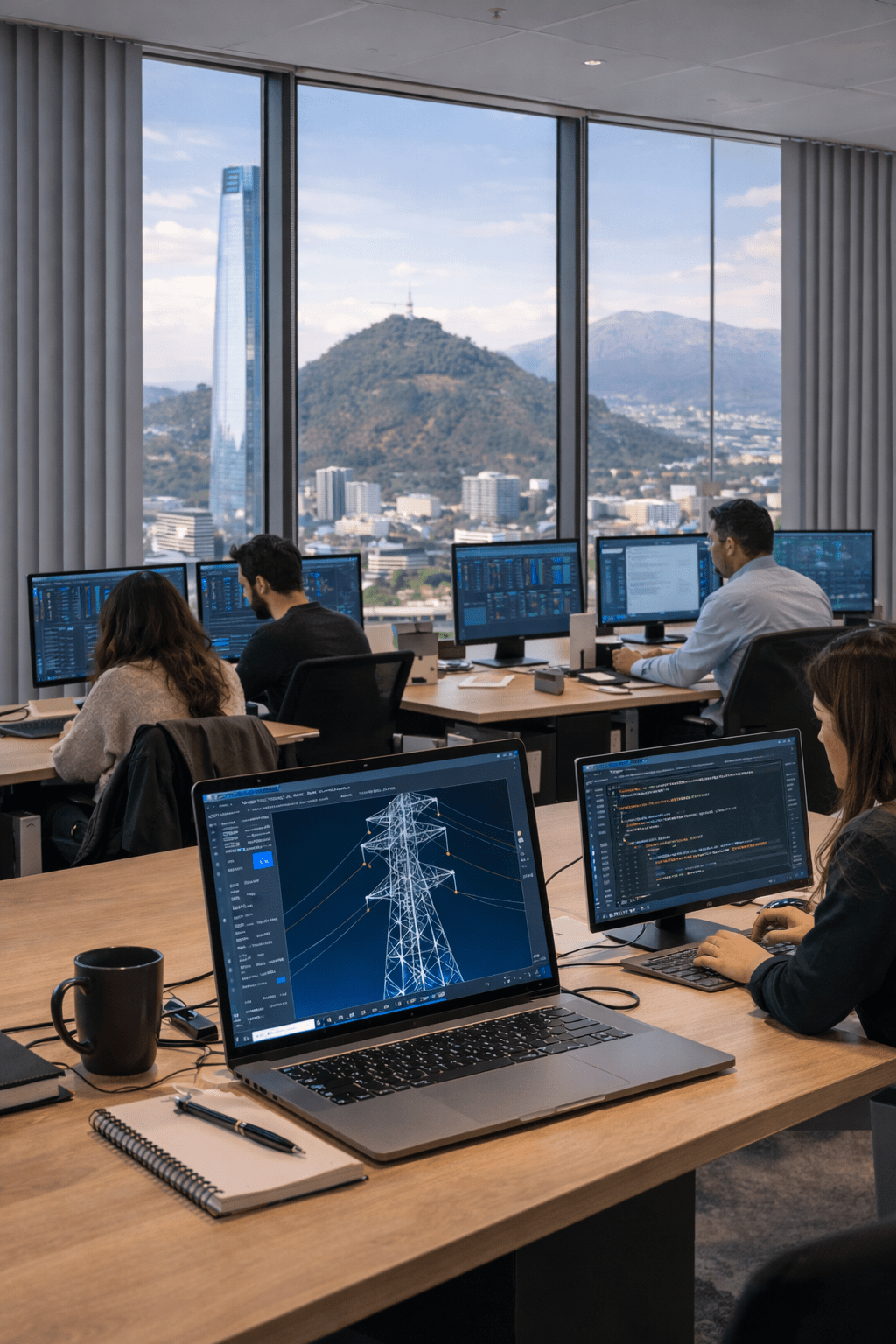
Electrical engineering software is a set of specialized programs used to design, simulate and verify power systems, substations and transmission lines before construction. These tools cover everything from power-flow and short-circuit calculations to structural modeling. BIM methodology complements this workflow by managing and coordinating information across disciplines. Esinel Engineers uses tools such as ETAP, DIgSILENT, PLS-CADD, Revit and Tekla to support every technical decision with verifiable calculations and coordinated electrical, structural and electromechanical models.
These tools provide the technical foundation for transforming a calculation or design concept into an executable, verified project coordinated across every discipline involved. In substation and transmission-line projects, no design criterion is defined by guesswork: every electrical clearance, fault current and structure is validated in specialized simulation platforms before work reaches the field. Electrical-system reliability depends largely on performing these calculations with internationally validated software rather than approximate estimates.
At Esinel Engineers, we combine general-purpose software—such as AutoCAD and Office—with specialized tools for power-system calculations, transmission-line design, structural analysis, civil design and digital coordination across disciplines. Each platform serves a specific role within the workflow, from simulating electrical transients to three-dimensional modeling of structures, equipment and associated works. This combination allows us to address projects of different scales, from medium-voltage substations to high-voltage direct-current transmission systems, while maintaining technical rigor in every discipline. Below are the main tools we use and their specific applications in our substation and transmission projects.
Our Specialized Software
Calculation, simulation and modeling tools used throughout every stage of detailed engineering, from preliminary electrical studies to final construction documentation.






BIM Coordination Across Disciplines
Our BIM methodology organizes and coordinates electrical, structural and electromechanical information for each substation within a shared workflow. Learn how we apply this methodology on our BIM services page.
Why Is Electrical Engineering Software Essential in a Transmission Project?
A substation or transmission-line project involves dozens of interacting variables, including short-circuit currents, protection coordination, mechanical loads on structures, conductor thermal behavior and electromagnetic compatibility. This type of software makes it possible to model these variables together, detect conflicts before construction and document every decision with traceable calculation reports, as required by Chilean regulations and international industry standards.
In addition, coordination between electrical software and digital models managed through BIM significantly reduces the risk of clashes between disciplines. A change in the layout of outdoor equipment, for example, can be reviewed across all relevant discipline models, preventing costly rework during construction. This integration is particularly important in large-scale mining and energy projects, where schedules are often demanding and owners require high quality standards.
Benefits of Using Specialized Electrical Engineering Software
Adopting specialized simulation and modeling tools is not only a matter of internal efficiency. It directly affects operational safety, regulatory compliance and the relationship of trust with the project owner. These are the main benefits we see in our projects:
- Technical traceability: every design decision is supported by a verifiable calculation report, as required by Chilean regulations and industry standards.
- Early conflict detection: simulation identifies protection-coordination issues, structural loads and electrical-clearance conflicts before construction.
- Multidisciplinary coordination: BIM methodology integrates electrical, structural and electromechanical information within a coordinated workflow.
- Cost optimization: these tools make it possible to evaluate design alternatives and select the most efficient option before committing field resources.
- Audit support: Power BI reports and ETAP or DIgSILENT calculation reports facilitate technical reviews by project owners and regulatory authorities.
This methodology is applied across our engineering studies and the development of engineering services for substations, transmission lines and electrical power systems throughout Chile, from northern mining operations to transmission projects in the central and southern regions.
Projects Supported by Our Electrical Engineering Software
Examples of how these tools support our electrical engineering projects in Chile.


Frequently Asked Questions
Esinel Engineers uses ATP, ETAP, DIgSILENT PowerFactory, PLS-CADD, RISA-3D, TOWER, EMTP, Revit, Tekla Structures, Civil 3D and Power BI, in addition to commonly used tools such as AutoCAD and Office.
ETAP is used to simulate power flows, calculate short-circuit currents, coordinate protection systems and assess arc-flash risks in industrial and distribution electrical systems.
PLS-CADD focuses on the complete transmission-line route—including profile, wind loads and structure locations—while TOWER specializes in the detailed structural analysis of each individual lattice tower.
No. BIM methodology supports the coordination of geometry, information and disciplines, while core electrical calculations—such as power flow, short circuit and protection coordination—are performed in specialized software such as ETAP or DIgSILENT.
Esinel Engineers is an engineering design and technical-supervision firm. All the software described is used to design, calculate, model and verify electrical projects; the company does not construct facilities or install equipment.
Do You Need Technical Support Using Electrical Engineering Software?
Let’s discuss how our simulation, calculation and BIM modeling tools can support the design of your next electrical project in Chile.
Contact Us